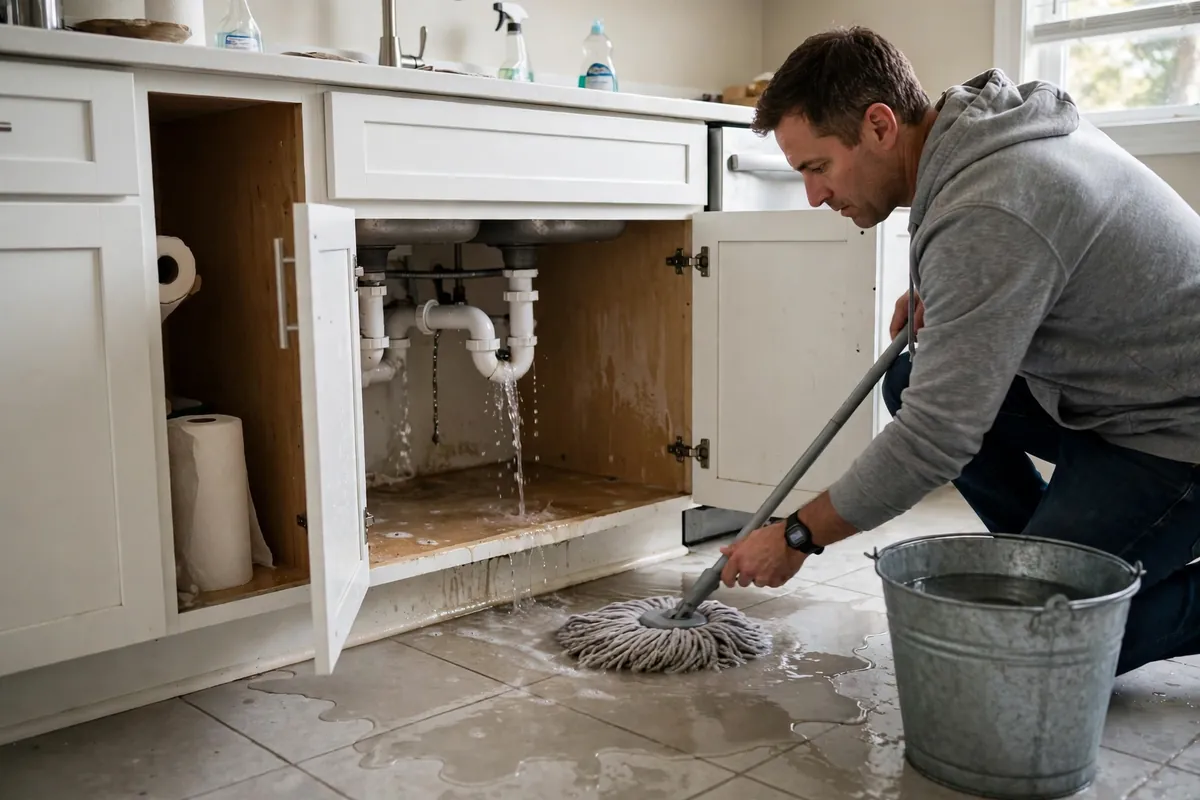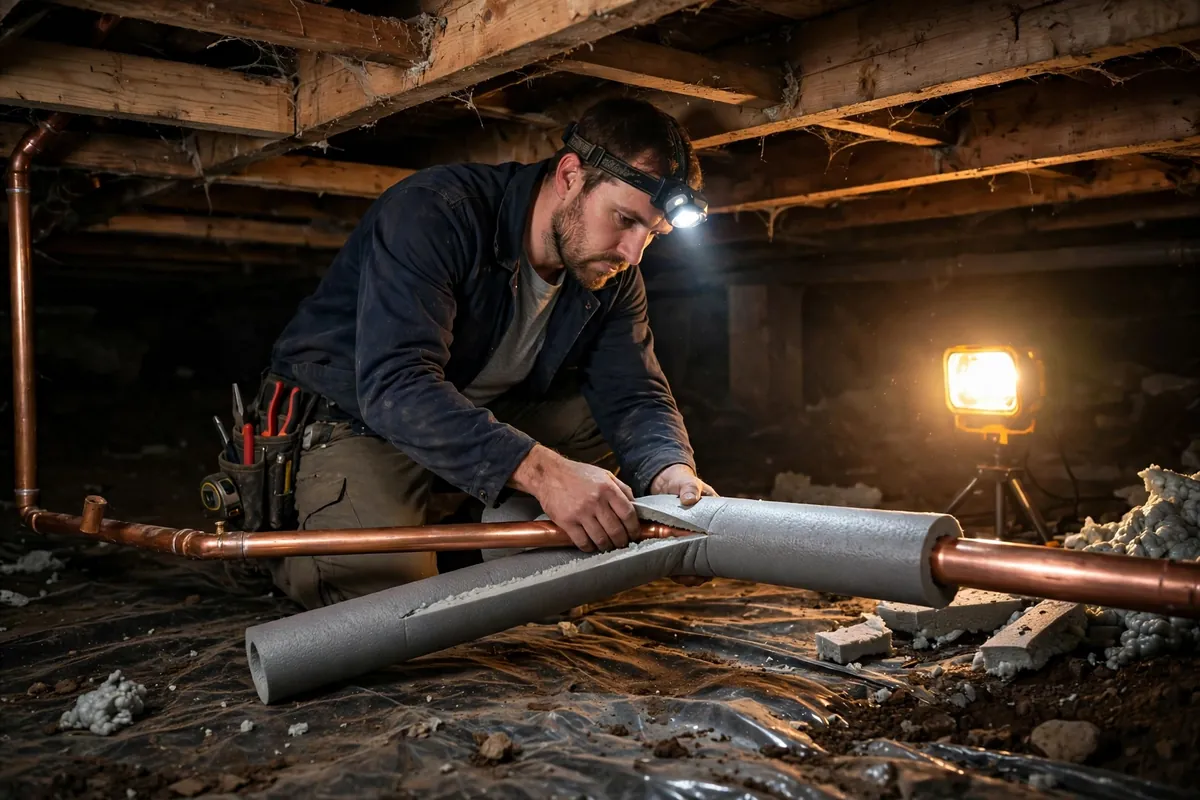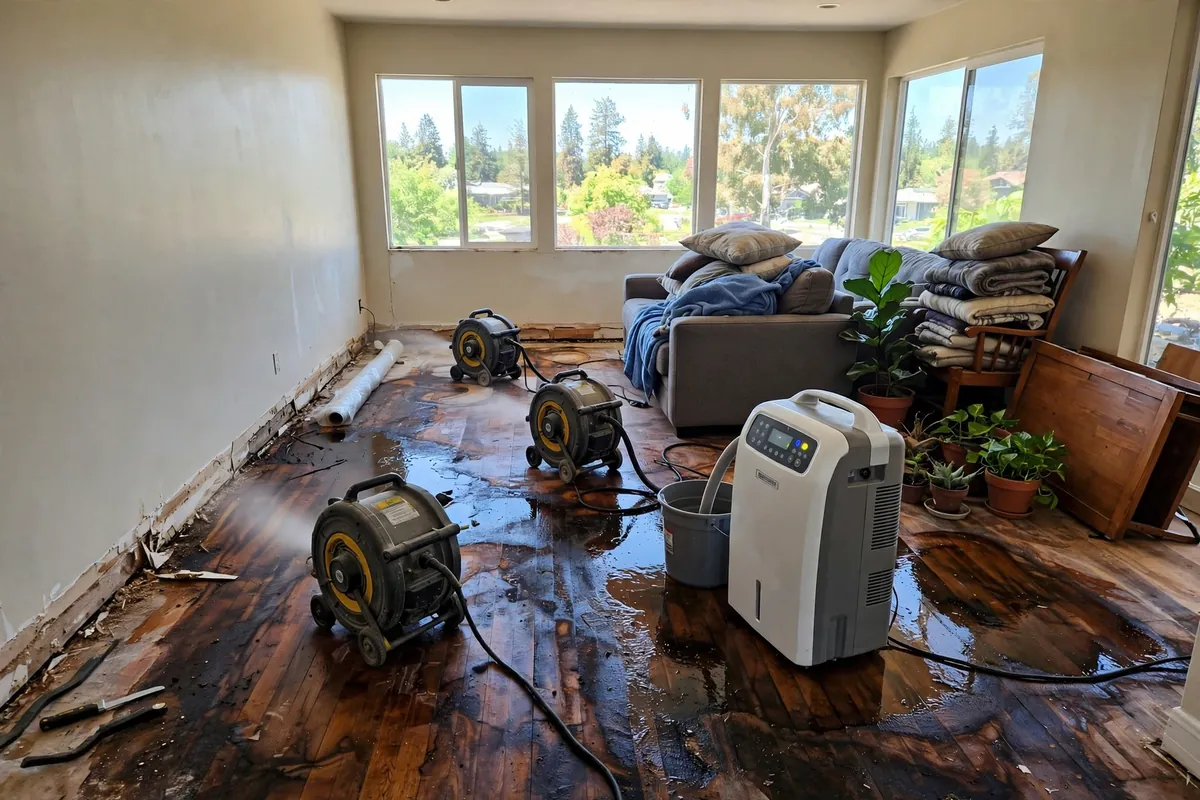
It's the question we hear on almost every burst-pipe call: will insurance pay for this? The short answer is that most standard homeowners policies cover the sudden water damage a burst pipe causes — the floors, drywall, and belongings — while the repair of the pipe itself is usually on you. The details matter, though, because claims get reduced or denied every week over causes and paperwork that homeowners never saw coming. This guide is general information, not insurance advice — your policy and your adjuster have the final word.
The usual split: damage yes, plumbing no
Think of it in two parts. The 'ensuing damage' — water-damaged flooring, drywall, cabinets, furniture, and the professional drying to save them — is what policies are built to cover, minus your deductible. The failed part itself — cutting out and replacing the burst pipe — is typically treated as home maintenance and excluded. The same logic applies to water heaters: a sudden tank rupture's water damage is commonly covered; the new water heater is not.
Sudden and accidental is the key phrase
Coverage hinges on the event being sudden and accidental: a pipe that bursts in a freeze, a fitting that fails without warning. Damage that builds slowly — a drip that leaked behind a wall for six months, corrosion that finally ate through — is the classic denial, because insurers consider it a maintenance issue the homeowner should have caught. This is one reason documented annual plumbing checks help: they prove you maintained the system.
The freeze clause many homeowners miss
Many policies cover freeze damage only if you took reasonable care: keeping the heat on in the home, or shutting off the water and draining the system if the house was unoccupied. A burst pipe in a vacant, unheated house during a Colorado cold snap is one of the most common claim fights we see described by customers. If you'll be away in winter, either keep the heat at 55°F or shut the water off — and be able to show you did.
How to document a claim that gets paid
Start before cleanup and keep going:
- Photograph and video the break, the water's spread, and every damaged item before anything is thrown away.
- Keep the failed pipe section if it's replaced — adjusters sometimes ask to see it.
- Save every invoice: emergency plumbing, mitigation/drying, and repairs, plus receipts for fans, dehumidifiers, and supplies.
- Write down the timeline: when you discovered it, when the water was shut off, who you called.
- File promptly — most policies require notice 'as soon as reasonably possible,' and late notice is another common denial reason.
What about sewer backups?
Standard policies usually exclude sewer and drain backups unless you bought a specific water-backup endorsement — one of the cheapest and most-claimed add-ons in our experience hearing from customers. If you don't know whether you have it, check before you need it: a backup into a finished basement is one of the most expensive water events a house can have. The endorsement typically covers the cleanup and damage, not the sewer line repair itself.